Garbage in, garbage out. That’s the golden rule of data analytics. There’s a whole spectrum of garbage out there, though, and your data might be trashier than you think.
You’ll need to get creative with your data (or use a real-time analytics platform that has already done so) to make it do what you want. Useful analysis is about more than formats, freshness, and standardization: It’s about context.
Key takeaways:
- Data is a constantly flowing resource, not just information in a database.
- New tools let you standardize and process big data to obtain real-time QoE metrics.
- Good data will improve many things: your operations, decision-making capabilities, and even your ability to efficiently handle M&A.
What’s at Stake? Understanding the Impact Data Quality Has on Your Organization
Before getting into the weeds, you probably want to know what’s in it for you. What kind of a difference does improving your analytics make?
Data quality has an impact on your revenue and the cost of the services you provide. It influences your ability to get more subscribers, show more advertisements, choose the most efficient way to resolve technical issues, and more.
Your data is more than an asset in storage. It’s a constantly growing, constantly flowing resource you can tap for key decisions at every level.
Ways To Store, Access, and Process Your Data for Maximum Effectiveness
You probably collect data about every aspect of your operations. From your accounts receivable to the number of fail-to-start events during streams of a specific piece of media, you have the receipts.
There are various ways that you can hold and access this information. Although aspects of your operations can still depend on data warehouses and traditional SQL queries, the most crucial to focus on is the streaming data you can process and access through a real-time big data analytics platform.
These platforms are relatively recent developments. They specifically focus on getting useful insights into what’s going on in big-data streams.
Context Matters: Filling the Holes in Your Analytics To Get the Big Picture
What’s in your stream? This question is more important and more complex than most organizations realize.
It’s one thing to apply streaming analytics to a time-indexed and stateful data stream. That is the basic prerequisite to get the trifecta of contemporary VoD or broadcasting analytics:
- Custom, real-time metrics (sub-60-second latencies even for highly complex functions)
- Scalability from low-overhead, purpose-built framework abstraction (not handmade SQL queries operating on a data warehouse at query time)
- Insight into every session via a constant census approach
This combination shows what’s going on at the ground level. It grows with your organization as you handle millions of concurrent streams.
At this point, you need to zoom out. Most analytics stacks don’t capture the entirety of the audience experience. That oversight can and often does cause huge blind spots during optimization processes.
For example, if your team is optimizing the viewer experience and targeting failures to play, there’s a chance that that behavior isn’t coming from the video player itself. It could be coming from a pre-roll ad that’s failing to load. It could even be a bug in your app that affects a specific end-user device.
QoE degradation could come from anything from the encoding to the CDN. Getting a data stream that shows the entire audience journey is a prerequisite to making good business decisions.
The Link Between Data Analytics Quality and Data Standardization
Having context is important. Understanding what you’re looking at is equally important. That’s where data standardization and cleaning come in.
Standardizing data is a classic element of using databases. Still, it seems to elude many organizations.
To emphasize this point, it’s time to go back to an old cliche. You have to compare apples to apples. This is most obvious when you’re using data from other organizations. Here are some things to consider:
- Is the basic infrastructure similar? What about the network setup?
- What are the niche concerns? Live sports broadcasting may call for higher video quality overall than mobile-focused VoD.
- Which standardization or normalization techniques are in play? Are they the same for all data?
- How old is the information? How much have standards changed?
- Is the data even from the video publishing arena?
It’s also important to look at your own operations and benchmark each and every metric that you’ve determined to target in your optimization process. Even if you don’t use these benchmarks for goal setting, you can use them to measure the effectiveness of each decision you make and adjust your roadmap accordingly.
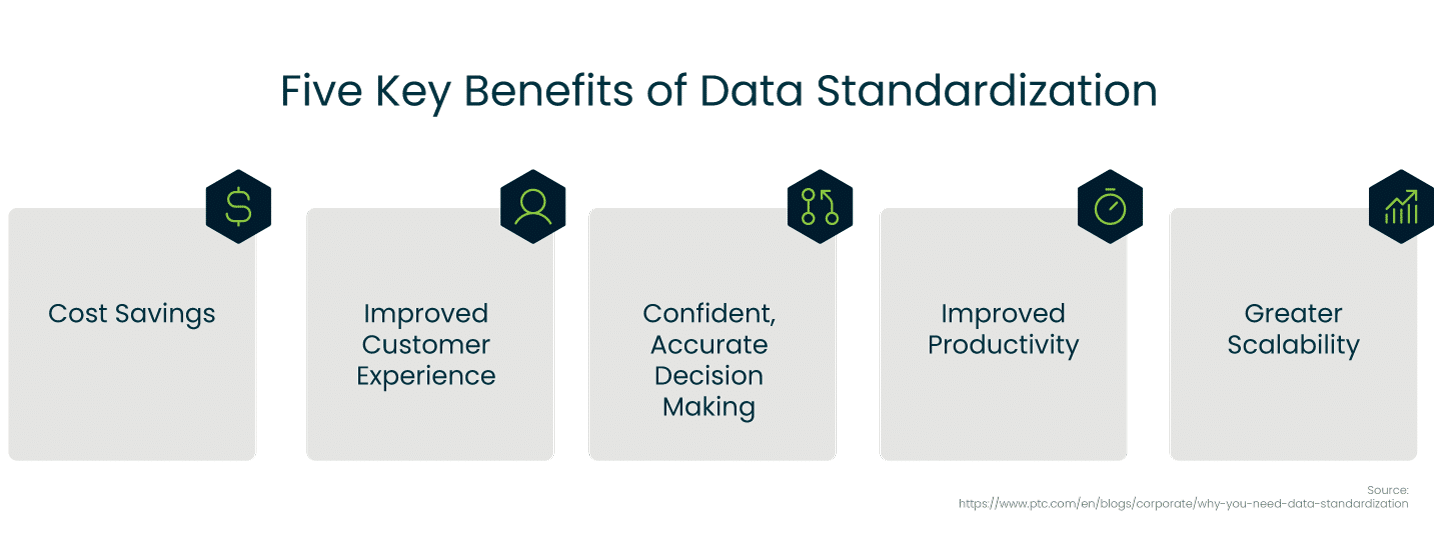
High-Quality, Standardized Raw Data Supports Operations, Executive Functions, and High-Level Strategy
So far you’ve read that data quality matters for various aspects of your organization. Here are some further details at play.
Operational Efficiency
Data quality matters during operations because it helps teams make quick, laser-targeted decisions. For example, with the right information, they may be able to make small network tweaks exactly where needed, rather than having to switch over huge sections of an audience. This reduces costs and prevents complications.
Executive Decision-Making
CTOs and VPs use analytics to guide the direction of the company and execute complex strategies. The more granular and complete the data, the better you can track and predict the outcomes of these leadership actions.
High-Level Strategy
Along with pursuing business objectives, good data and good data practices enable growth on a strategic level. For example, the classic merger-and-acquisition database-migration nightmare becomes much less of an issue when you have standardization policies in place.
Explore the True Power of Data Analytics
Now that you’ve read about it, why not try it? Check out our every-device, every-minute analytics or click here to schedule your demo.